
The “lowcost” trend dominates the Spanish children’s sector and now accounts for 30.4% of sales in 2023, compared to 22.4% in the year before the pandemic. With a birth rate of 1.19 children, Spain ranks last in global demographic growth. This is a factor that is negatively impacting sales of children’s fashion and products. The top ten operators by sales have lost market share, dropping from 43% in 2019 to 41.6% last year. Low-priced fashion chains are gaining ground over specialised chains and multi-brand retail.
The “lowcost” trend has taken hold in the children’s fashion sector since the pandemic. Establishments such as Lefties, Pepco, Primark, and H&M, among others, continue to gain market share according to data from Kantar Worldpanel. The economy has not favoured demographics in Spain, which ranks last in births worldwide. Only in the clothing segment, children’s fashion has recorded a decline of -5.8% in volume and -3.3% in value in 2023.
Rise of the “lowcost”
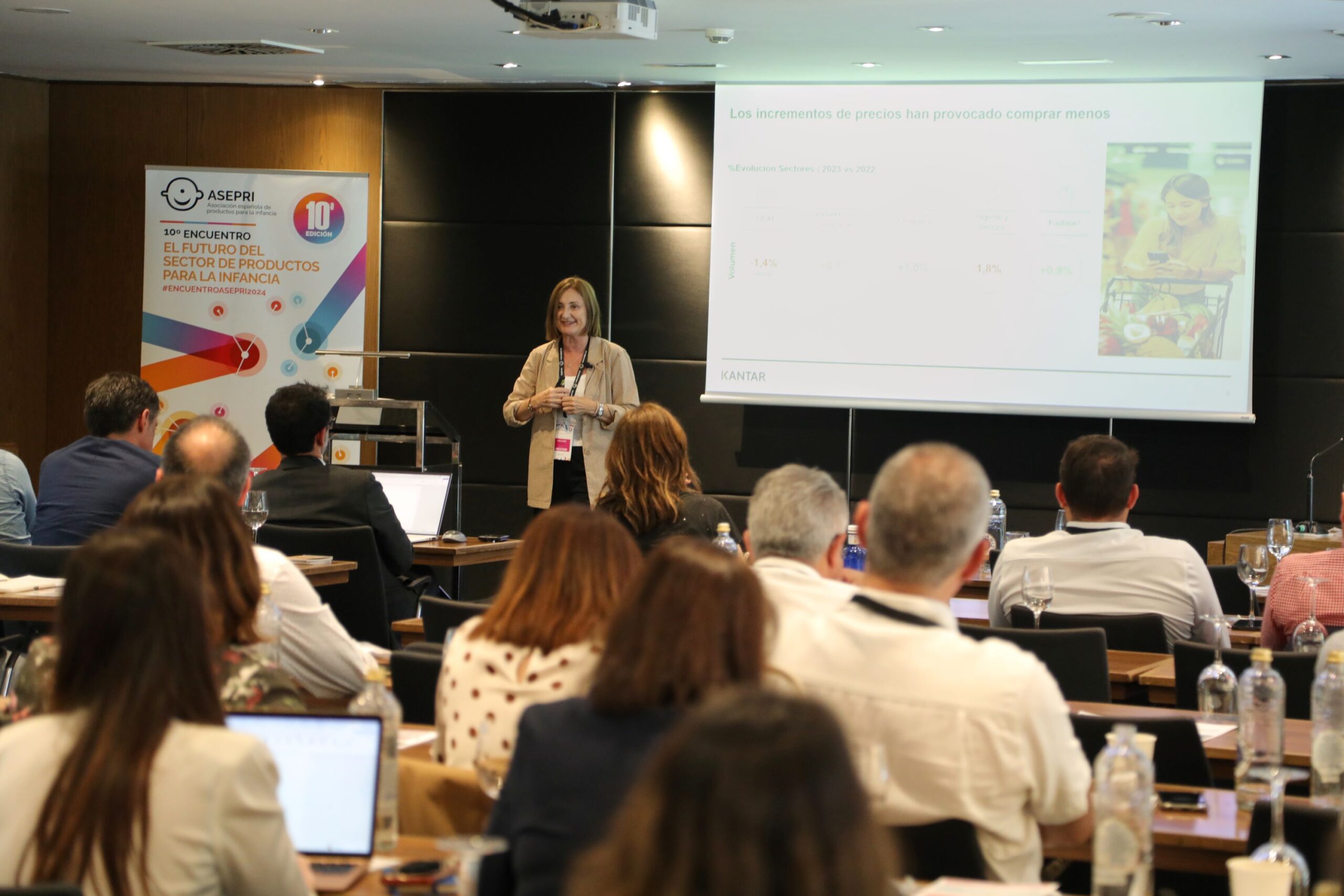
During the 10th ASEPRI Meeting (Association of Children’s Products), Rosa Pilar López, fashion director at Kantar Worldpanel, provided an overview of the evolution of the children’s fashion sector in Spain. With the constant decline in birth rates and rising inflation, low-priced fashion establishments have surged. According to the data, the “lowcost” has gained 8 percentage points, rising from 22.4% in 2019 to 30.4% last year. Additionally, 30% of children’s fashion sales occur in this type of operator, compared to 20% in adult fashion.
The top ten operators in children’s fashion sales have remained at 41.6% of sales since before the pandemic, now at 41.6% in 2023. El Corte Inglés continues to lead the ranking, despite losing market share. Following are Primark, Zara, Decathlon, Carrefour, H&M, Amazon, Lefties, Sprinter, and Kiabi. As Rosa Pilar López commented, “most retailers are doing well in children’s fashion. We must pay close attention to new operators as they have significant growth potential.”
Among all these operators, the ones growing the most since 2019 are Amazon, Lefties, and Sprinter. Primark remains stable, while Decathlon has slightly declined. The rest have lost market share compared to 2019. Outlets are also gaining share because “the consumer wants brand, but at a low price,” López pointed out.
In fact, chains like Pepco have 2 million consumers in Spain, just two years after their introduction. Currently, there are already 225 establishments.
Supermarkets and multi-brand retailers on the decline
Supermarkets, multi-brand stores, and specialised chains have lost market share in children’s fashion sales. It is the outlets and other channels that benefit more significantly than in the general fashion sector. In the clothing segment alone, the children’s sector has declined by -3.3% in value and -5.8% in volume due to the decreasing number of children.
In fact, in 2023, there were 322,000 births in Spain, of which 23% are foreign. This figure is the same as that recorded after the Civil War.
Spanish women have their first child at an average age of 38. Furthermore, 55% of mothers are over 45 years old. This is a factor that influences the birth of a second child. All these data prove that Spain ranks last in birth rates, which explains the loss of sales in the children’s sector, which today accounts for 9.7% of fashion sales in Spain.
Sales by product type
Clothing is the best-selling product category, with 70%; footwear accounts for 27% and accessories, which have increased by 8.6% in 2023, represent 3%. Sales of clothing and footwear declined by 3.5% and 3.9% respectively in 2023.
Regarding purchases by age, 40% of the volume is focused on children aged 0 to 5 years and 27% on those aged 6 to 9 years. 33% of spending occurs in the age range of 10 to 14 years.
In value, teenagers account for 43% of sales, followed by the under-six age group with 33%, and 26% among children aged 6 to 9.
Finally, according to Kantar Worldpanel, physical purchases are also recovering in the children’s channel, although it fell by -5.1%, compared to the 4.7% increase in the online channel. The phenomenon of multi-channel purchasing is also consolidating in this sector.