
The media-savvy economics professor from the University of Barcelona points out that retirees have the most purchasing power and support their children and grandchildren, while young people prioritise leisure over durable goods.
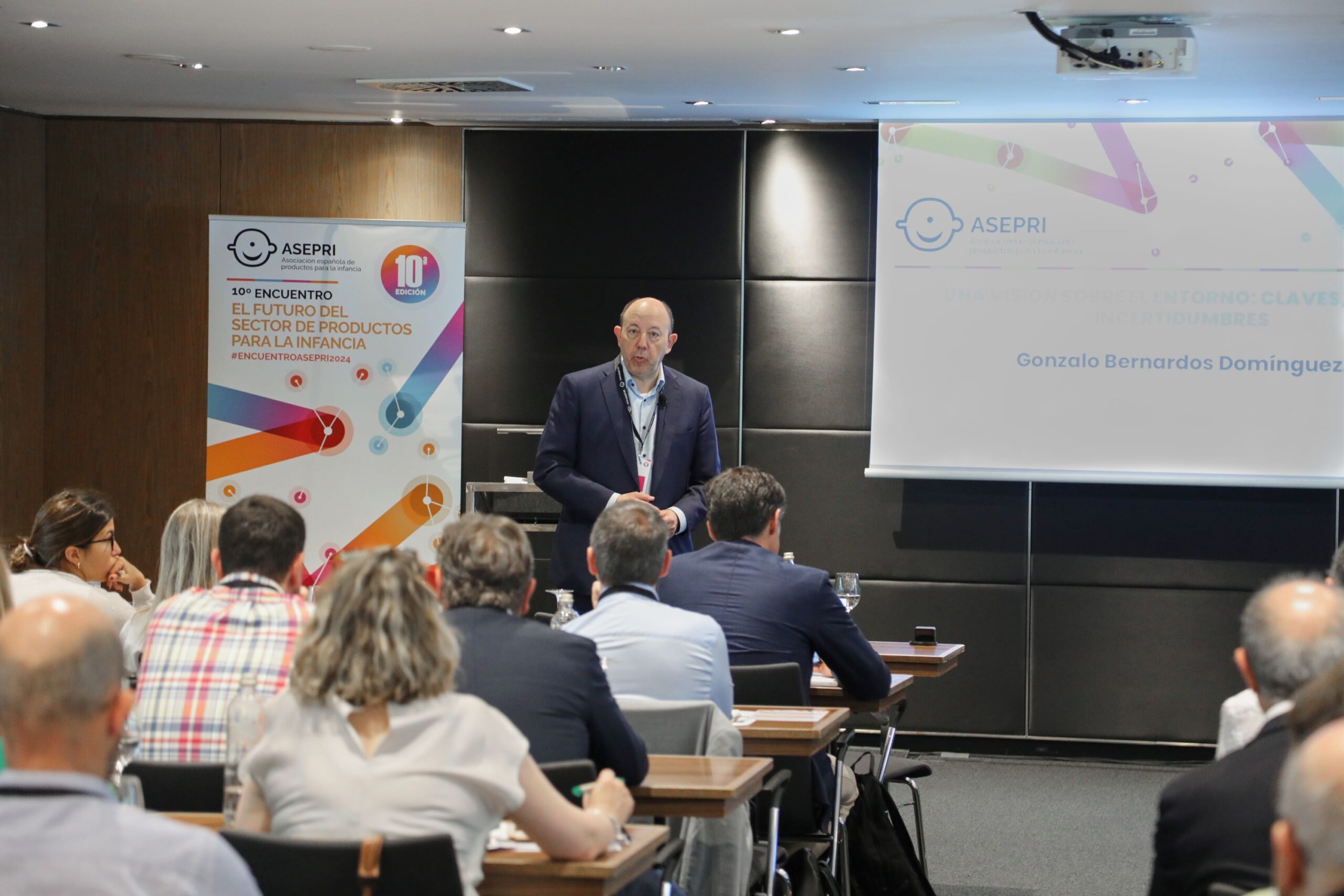
“Target the grandparents more, that’s where the money is”. Gonzalo Bernardos, an economics professor at the University of Barcelona, gave this advice yesterday to businesspeople in the children’s fashion sector in Spain and laid out all the arguments that support it. In summary, two: first, retirees have significantly more purchasing power in Spain, and second, consumption patterns have changed. And a bonus track: “when you become a grandparent, you go a bit mad.”
During his speech at the tenth annual conference of the Association of Children’s Products (Asepri), Bernardos indicated that in Spain pensions are “very generous”, filling the pockets of older individuals and making them by far the age group with the most purchasing power. Not only that: due to natural laws, they are also the ones who receive inheritances when they are in their fifties.
“Your audience is not just parents, considering that in Spain grandparents support their children and grandchildren,” the economist stated. Furthermore, young people have changed their consumption patterns, in changes that “negatively affect” an industry like children’s fashion, he warned.
Bernardos maintains that pensions in Spain are high and, moreover, retirees are the ones who have received the most inheritances.
Young people, he elaborated, “only think about the present”, even though they are the ones with the most future: they increase spending on leisure and tourism, do not generate savings even with home purchases (hence, partly, the inflation in the rental market in major European cities), and have minimal commitment to their jobs.
With a focus on the short term, studies that extend with master’s degrees and postgraduate courses, and a tendency to seek immediate personal well-being, young people do not enter the job market until they are older than previous generations. “And when they do, they look for ‘the job of my life’,” Bernardos illustrates.
Hence, the professor explains, the delay in having children until after 30 or 35 years old, a trend that in his view cannot be reversed with policies to incentivise childbirth. What’s the result? Older parents who avoid spending on durable goods and who need help from their own parents to raise a family.
Another factor, Bernardos continues, that supports the idea of targeting grandparents is that they “do not want to educate their grandchildren”, but rather experience with their grandchildren the so-called “grandparent syndrome”: they want to play with their grandchildren the same games they played when they were children.
The goldmine of immigrants
The other goldmine for the children’s fashion sector is, according to Bernardos, immigrants. In a context of increasing immigration, foreigners not only have a higher birth rate, but also led job creation in Spain in 2023: the number of jobs rose by 11% among foreigners and only 1.8% among Spanish nationals.
Although with generally lower purchasing power, the professor points out that foreigners are more interesting for children’s fashion than Spaniards: not only because they take jobs that Spaniards do not want to do, but because their birth rate is much higher.